Become a Member for as little as $4/mo and enjoy unlimited reading of TSLL blog.
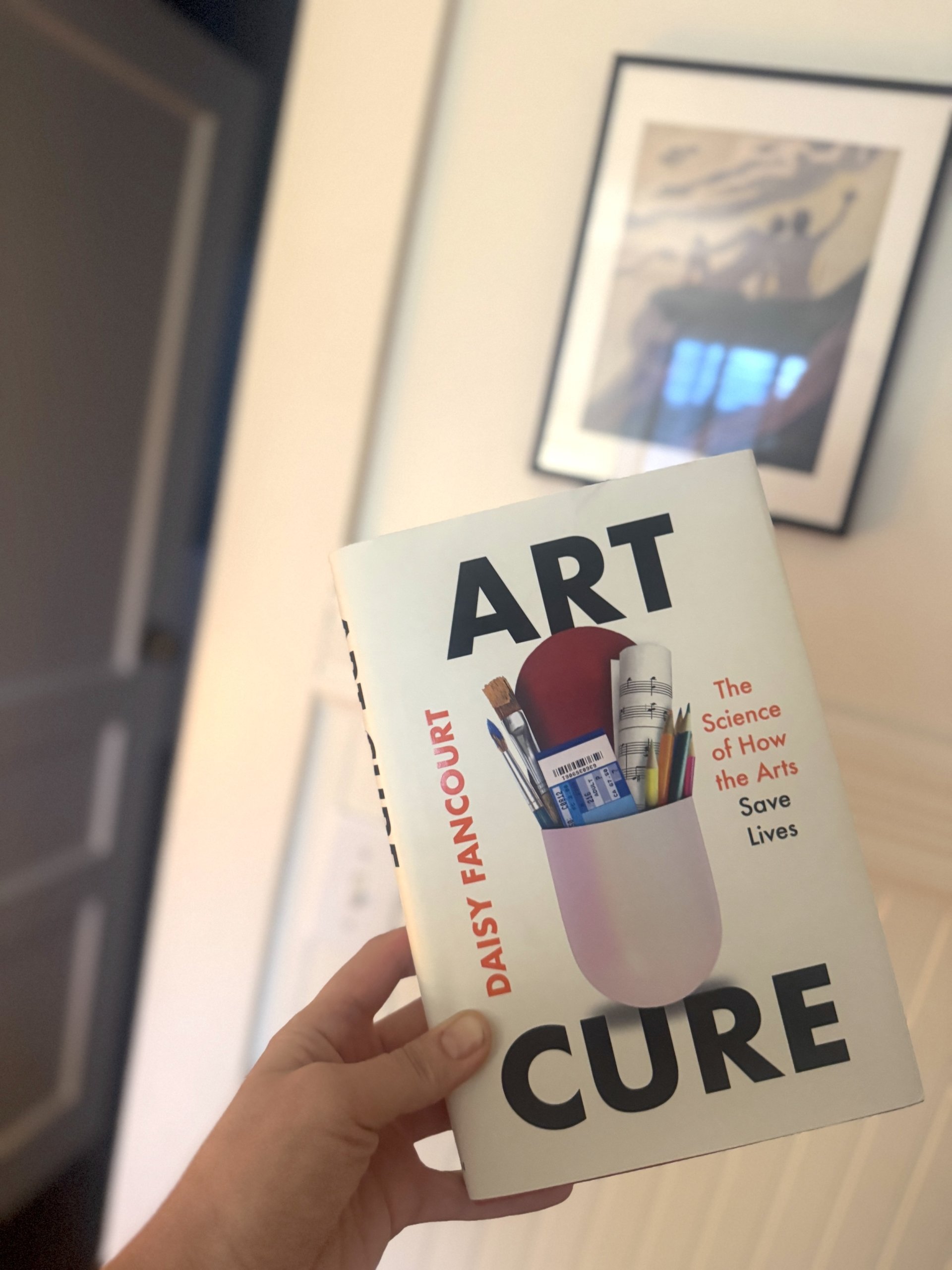
“Art—alongside diet, sleep, exercise, and nature, is the forgotten fifth pillar of health.” —Daisy Fancourt, author Art Cure: How the Arts Save Lives
Pleasure reading – mandatory. Listening to your favorite music – a have-to, not a want. Dancing – required participation. Viewing something of beauty – a daily must-stop and do.
Each of these and so many more examples of the various forms of art that we may enjoy, often are presented as discretionary, or if we have time, or if we have money. But the truth is, just as professor of psychobiology and epidemiology at University College London Daisy Fancourt writes, we would be best advised to view them as necessities for living well.
In Art Cure, Fancourt writes to underscore how important the arts are, and reveals how varied and different forms of art can be. We’re talking about how they improve our health, something we seem to be obsessed with as a culture, but as a culture often overlook the most enjoyable forms of becoming and maintaining good health.
In today’s episode, we’ll explore what the arts consist of so you can find your choice of art, the many health and life benefits, and explore in detail how you can incorporate art daily into your life.
Let’s get started.
“The arts are not a luxury; they are an essential.”
There are hundreds of ingredients that can determine if something is part of the ‘the arts’. When the senses are stimulated – auditoriliy, visually as we notice different shapes, colors, reflection of light, the sense of smell if we are in the kitchen, the garden, or working with wood. Fancourt goes on to share the common ingredients people associate with art are “imagination, creativity, novelty, emotional expression and maybe even beauty.” And while these are the core ‘artistic’ ingredients, sometimes we forget how many activities most definitely fall under the definition of ‘the arts’. Let’s take a look at an already long list of activities that is really just a sampling of what constitutes art. Art activities included in the study that contributed to noticeable health and well-being benefits:
- reading (pleasure and to inform)
- painting
- knitting
- crocheting
- quilting
- playing a musical instrument
- dance
- singing
- sculpture
- drawing
- writing
- wood crafts
- embroidery
- printmaking
- photography
- listening to late-night jazz performances
- attending electronic arts events
- viewing street arts
- performing magic tricks
- baking and decorating cakes
- growing flowers
- gardening
- performing choreographed ice skating routines
- whittling
- cooking an intricate recipe
- choir
- theatre
- dramgroups
- band class
- visit the library
- art workshops
- listening to classical music
- listening to any music without lyrics
Notice what is not included in this list: cinema, even documentaries and especially television. It will not surrpise anyone to learn that Fancourt found studies demonstrating that “television viewing is linked to poorer cognitive outcomes ten years later.” She does point out that “up to about three and a half hours a day of TV watching, there isn’t much evidence of harm. But hour by hour, the more you watch beyond this point, the worse your future cognition.” Why? Films and television programs that contain violence are stressful and this increases the stress hormones that “can lead to shrinkage of the hippocampus and impair the development of new neurons.” However, even when there is no violence, watching a documentary on art hasn’t been proven to demonstrate any benefits.
To that last point though, if watching a documentary about anything you are curious about gives you knowledge and a bit more confidence to then go explore it in person, watch the documentary, watch the film or program because part of why arts can be intimidating is that we think or are lead to believe that there is a certain skill to observing it or taking it in. This is absolutely not true; taking in art is an individual experience and we each will respond in a different way. However, speaking from my own experience, by watching oodles of documentaries about Impressionist painters, my curiosity deepened, and I felt my in-person experiences at museums and even while reading books were deepened, giving me all the more to savor when I had the opportunity to engage in the ways that have been proven to improve our health.
Some of the many health and life benefits of regular engagement with art
The arts help us to ‘flourish’, and each of our flourishing into what sparks joy and leads us to contentment will result from improving our overall health. And that is exactly what daily, intentional doses of art will do.
Resilience is strengthened – both physically and mentally. By stretching ourselves to experience different art forms, different types of art we most enjoy, we expand our perspective, learn about other people, understand history, appreciate a wide variety of strengths while also finding the courage to find our own talents.
Our well-being improves in a variety of forms:
- improved immune function
- improved sleep
- prevention of depression
- prevention or reduction of chances of Altheizmer’s disease and chronic disease
Explore each of the studies throughout the book Art Cure as they are cited, as well as anecdotal examples of individuals whose lives have changed or improved as they incorporated daily doses of art in their lives.
Increased length of life, and simultaneously increased quality of life experience. In episode #362 (shared below),13 aspects were explored for how to live a long and well-lived life, and two points included were the importance of finding what we each can uniquely give and finding multiple sources of ‘juice’. The arts are most definitely one, if not many ways we can add ‘juice’ to our life, and we do this by, as we will explore further along in our discussion/post today, following our curiosity and honoring it. Along the way, we will find what we can uniquely give to the world.

Improved cognition and memory. By listening to music regularly, playing instruments, reading for pleasure, making textiles and crafts, going to cultural events, cooking, engaging in creative writing, visiting the library, and taking dance or acting classes, students have found lower deposits of amyloid beta and lower amounts of lesions (damaged tissue) in the white matter in their brains. Cognitive retention improves because high cognitive reserve delays the transition from mild cognitive impairment to full dementia by about seven years.
All of these benefits are just a sampling of the good life and good health awaiting us when we acknowledge and then actively incorporate art into our daily lives. By sharing today’s episode/post with you, I hope to encourage you to instead of seeing engagement with the arts as an ‘extra’ or a luxury, see it as a necessity. The arts, daily engagement, is a necessary ingredient in a healthy, well-lived life.
Now, let’s take a look at five ways to enjoy and incorporate our into our daily lives and how to make it stick for each of us uniquely.
“If you can dedicate thirty to sixty minutes once a week to engaging in the arts, studies suggest you can expect to see improvements in your well-being within around six weeks.”
1. Engage effectively with art
It all comes down to savoring. Yep, one of our favorite skills here on TSLL for living a life of contentment, savoring comes into play as a necessity when it comes to engaging with whatever art we’ve chosen.
“If we are hoping that the encounter with an artwork will be more meaningful, we need enough time to look, think, respond, look again, and so on, and this takes minutes, not seconds.” Fancourt goes on to remind us to “reduce other sensations—put our phones away and designate a set amount of time to focus on and not allow other distractions.”
When it comes to experiencing art and holding our focus, reflect on how you can best hold your attention. Do large museums feel overwhelming, and you find yourself rushing through them trying to see everything? Why not take the pressure off, and as was demonstrated in the novel Mona’s Eyes, just go visit one artist, one room, or even just one piece of art, and really explore it? Or provide ‘guardrails’, so to speak, and seek out small art galleries, exhibits, or events that require you to only focus on one thing at a time without feeling pressed for time or rushed by the crowds.
2. Follow your curiosity
The most helpful way to continually incorporate art in our daily life is to go where our interests take us. Seek out art forms that satisfy the sweet spot of involving enough familiarity while also having enough complexity to pique our curiosity to learn more, look, or listen more intently.
For example, when it comes to music, what do you love to listen to? Stick with the same genre, but seek out different artists or time eras. If you don’t like classical music, what about blues or folk music? Explore, but just enough. Part of why our arts exploration may end before we’ve barely begun is because we’re following someone else’s direction of what we ‘should’ like. In other words, what they like. But each of us will be different, so you do you. Follow your curiosity and stretch ever so slightly out of your comfort zone – to view a new exhibit, to try to learn a different technique when it comes to painting, but still, you are doing what you love, painting.
3. Varying what you experience
“The more varied your engagement in the arts, the more beneficial ingredients you’ll be exposing yourself to, giving you the greatest chance of meeting diverse psychological needs.”
The diversity, no matter how far or gradual we stretch into different mediums of art, broadens the way we think. This builds psychological resilience as we are exposed to different life experiences and perspectives. But to reiterate as shared in point #2, following where your curiosity and enjoyment lead you, that will help this practice of daily engagement with the arts become a habit you continue, which leads us to the next point.
4. Consistency is key
To help ourselves out when it comes to engaging with the arts daily, we can help ourselves out by finding activities that resonate with who we are and our sense of self. By engaging in activities we enjoy, our emotions become more regulated, and our blood pressure drops and our dopamine rises.
Fancourt advises that knowing ourselves is the key – “which type of sensory ingredients are most beneficial for you: visual, tactile, auditory, or otherwise.” Knowing ourselves will help us prescribe the best ‘arts’ medicine for a strong well-being.
5. Write your own prescription
Unlike a concrete list of steps detailing which type of art to engage with and for how long, we each become our own guides. Now that we have the science proving how immensely beneficial art engagement is to our health, and how varied the types of art available to us are, we need to write our own daily dose prescription that will hold our interest and be activities we sincerely enjoy. Equally important to knowing what we love is honoring what we don’t, even if others may prefer it. “If we force ourselves into arts activities or clubs that don’t fit with our personal identity, we can actually provoke more stress and anxiety.”
Have fun assessing what you love doing. Often, we forget that many activities we already engage in are actually art. For example, *forehead slap with palm* I at first ignored my daily writing as a form of engaging with art. Hello! Sometimes because we do something so regularly, such as listen to a particular radio channel that plays our favorite musical genre, we don’t’ realize that we already have daily opportunities of art in our lives. Now, with this new awareness, perhaps we just need to be more fully engaged in the listening of that music, and shift away from having it just be background music. Stop, sit, close your eyes and listen to that favorite composition – one of mine is Beethoven’s sixth symphony, the Pastoral. Oh! I will now stop whatever I am doing and listen to however many movements the radio station chooses to play of it. I adore it!
Awareness and being fully present to focus on the art we engage with is the crucial part of reaping the health benefits of art. Take a moment today or sometime this week to write a list of how you can incorporate daily doses of art into your life and throughout the calendar year which may involve trips or upcoming schedule events in your local area. Just knowing that you are giving yourself medicine that you will enjoy taking enlivens our days.
In this moment, as I write the conclusion, I look around me, and I count myself fortunate. First, fortunate to have had a mother who knew the value of the arts and as early as I can remember had me enrolled in ballet classes. I can still remember my delight in elementary school when it was our day of the week to go to Mr. Wishart’s art class (great name, right?!) and to step into his classroom, full of all sorts of tools, finished art in different mediums and then to attempt to do something of my own. I credit so much to the adults in my life who knew the importance of art for children because once I graduated from high school, I continued to be drawn to art in some form – finding comfort, inspiration and so much more that is hard to put into words.
May today’s episode/post be a reminder to take your daily art medicine, however you choose to design it for your life. And discover how enriched your life will become.
~Purchase Art Cure in the US here, or in the UK here.

SIMILAR POSTS/EPISODES YOU MIGHT ENJOY
episode #415: The Life Nourishing Benefits of Welcoming Art into Our Sanctuary (and how to curate your own collection)


Petit Plaisir
The Bookbinder’s Secret: A novel by A.D. Bell

To advertise on this podcast please email: ad-sales@libsyn.com
Or go to: https://advertising.libsyn.com/thesimplesophisticate

Hi Shannon, our question this month and listening to this podcast have inspired me to seek out more ways to incorporate art into my daily life – classical music has been on my mind for awhile and I’m going to start a new playlist – so thank you! I purchased the Art Cure book when you initially mentioned it – but have not started it yet and look forward to learning more. So wonderful to learn that all of these beautiful things that we enjoy are also enhancing our physical and mental health. It makes sense but I’d never thought about it in that way. Thanks for another great podcast. 🙂