Become a Member for as little as $4/mo and enjoy unlimited reading of TSLL blog.
“There’s a sense of comfort and safety that can come with knowing [our neighbors] — and building a safe and caring community is a valuable way to stay connected to the place you live.” —Diana Opong and Janet W. Lee, in their article “How to be a good neighbor“
Being a good neighbor is a daily practice in awareness. Both in what and who surrounds us, as well as how our own choices might affect others.
In a recent article I came across in The Financial Times -“Why neighbors matter more than ever in the digital age“, the term ‘neighbouring’ was explored. Described as a “more neutral verb (much like ‘parenting’) that emphasises what we do, rather than who we are, I began to ponder how consciously this skill asks of us each to engage with our fellow neighbors. We have to choose, we have to be an active participant, rather than standing on the sidelines, or in this case, staying inside our homes, and connect in a healthy way with the neighbors who live in proximity to our front door.
Sharing from my own experience, having lived in neighborhoods where I rented or owned, while not every neighbor was someone I became well acquainted with, I feel fortunate to have, or continue to have, neighbors in each place I called home who made living there all the more enjoyable. While indeed strong neighborhood ties are a two-way street, we can only control our part, and we do have a part available to fill. How we fill it will determine so much of the quality of our everyday life. This is what I would like to talk about today.
Our neighborhoods are ground zero for reestablishing trust in humanity. That may sound extreme or hyperbolic, but hear me out.
While yes, we do get to choose where we rent or purchase our home, what we don’t get to choose is who also lives in the neighborhood once we’ve moved in. Learning to accept and respect others’ way of life, while living our own, is a hallmark of a civil society.
This social contract we sign invisibly by being part of a democracy, being part of this grand experiment of believing that human beings can figure this out, – how to peacefully live our lives while those around us live theirs, acknowledging and seeing them as human beings just as we are ourselves, we begin to demonstrate our ability to do this in our neighborhoods.
Once we begin to see our neighbors living their everyday lives – bringing their groceries in after a long commute, looking tired and ready to sit down and be done with the day, rounding up the kids to get them in the car to get to school on time, picking up after their dog and lovingly petting and caring for them – we are reminded that they are just trying to live a life that makes them happy and cares for those they love. Just like us.
When we begin to see our similarities, no matter how few they may be, that is where we begin conversations. When we pass each other on the sidewalk walking our dogs, or pass by their house as they are unloading their car after returning from holiday, we talk about what we see they care about or what we realize we have in common. And we all have in common living in this neighborhood, we find ourselves cohabitating.
A beautiful aha happens once we’ve established this awareness. If later down the road, we see or learn they have a different perspective than us, we may come to understand why they have that perspective. Maybe it came up in a previous conversation, the pain of losing a job, or kids struggling at school, and so while we may never agree on what is being chosen, we can be diplomatic and sympathetic rather than antagonistic or see them as other, thus dehumanizing them.
Having expectations of what others must be or how they must live, as the case is with our neighbors, is a recipe for resentment. Instead, choose to be a neighbor who begins without prompting, engaging with kindness, welcome, and acceptance. Let’s explore how to strengthen our neighboring skills.
First, let’s acknowledge a wonderful reality. Whether you live on top of your neighbors in an apartment building or something similar, live in a single-family home in a suburban neighborhood, or live acres away from your neighbors settled out in the country, we each have neighbors whom we pass by regularly, year-round. The question I invite you to ponder is, are you letting an opportunity pass you by, or are you an active participant in a part of your life that, while certainly different compared to other types of relationships, does have the ability to enhance our daily life and well-being?
Opportunity of Quality of Life Enhancement at our Doorstep
1. A community that surrounds us everyday
“Not everyone has families, romantic relationships, even friends. But almost everyone has neighbours.” —Tiffany Wyatt Smith for The Financial Times
Right outside our front door is an opportunity to boost our well-being and boost our sense of possibility and trust in humankind. But it’s not about what we receive, it’s about strengthening our neighboring skills, and thus, what we give to our immediate community, our neighbors.
2. A direct line to analog living
Analog approaches to everyday life have been a frequent topic, even here on TSLL. And the good news is, we each have the opportunity to embrace this approach by choosing to apply our neighboring skills.
For some of us, it may be foreign, and something we haven’t observed often. For others, we may have had parents or found ourselves in past neighborhoods connecting well with our neighbors, seeing positive exchanges and support. Either way, it is a skill, and we all can learn it and experience the benefits.
This face-to-face, unscheduled, entirely spontaneous way of connecting with others, at first most definitely, and then as we get to know each other, we may plan gatherings, etc., pulls us out of our digital world and into the real world, and that is a very good thing when we do so consciously.
Another bad habit learned due to the habituation of our digital devices is impatience, and so it is important to remember that to be a good neighbor requires patience to build a relationship of trust. We’ll talk more about how to do all of this just below.
How to be a good neighbor
1.Make the choice to get to know them when an opportunity presents itself, without being nosy
Often our fear of being nosy keeps us from reaching out, when in actuality, the moment you extend a hello or a sincere compliment about their yard or anything you observe that they care about, this kindness extended gradually builds trust.
The extension of kindness is the simplest and often best first way to get to know each other. Even if no help is needed in the moment, letting them know you’re available to help in ways that you can begins to establish a comfortable connection.
An example with one of my new neighbors occurred when their garage door happened not to shut when they left for the weekend. Since they were new, we hadn’t yet exchanged numbers, but we had introduced ourselves. Both my neighbor and I wanted to help and shut the door, so after asking around if anyone had their number (no one yet did), we, together, shut the door, and then when they came home, I shared with them what they did. At that time, they asked if we could exchange numbers, and then I reassured them that I would only reach out if it’s an emergency, not to bother you. This was my way of setting a boundary, while also letting them know I was there to help.
2. Acknowledge each other
Another simple way to begin to build trust is to acknowledge your neighbors when you see them. A simple hello, wave, or nod of the head is all that is needed. No conversation, as often we and they just want to get about their day, as we don’t know how the day unfolded, nor do they for us.
While it may appear to an outsider an insignificant gesture, sociologists reassure that they are indeed significant, calling them “invisible” because they are “fleeting moments of contact create feelings of familiarity” (Tiffany Wyatt Smith for The Financial Times). When we feel seen, and we acknowledge seeing someone else, this is a basic human need of connection that is being fulfilled, and it plays a significant role in regulating our nervous system, letting us feel safe.
3. Exercising awareness
From being aware of the proximity of your neighbors and subsequently, what they can then hear, see, or smell, when we remember there are many people living their lives and not everyone is living exactly as we do, we then make choices of thoughtfulness.
This doesn’t mean we cannot have a soirée at our home, or put up holiday lights, but knowing that our neighbor’s bedroom window is next to the roofline where our lights are strung, and making sure to put a timer on our lights so they shut off automatically at a reasonable hour shows respect, extends kindness and saves on your electric bill as well.
Depending upon your living situation, parking and where to park for a variety of reasons may be an everyday detail to be thoughtful about as well.
Another detail that brings into the discussion of boundaries is trees as well as any plants that may spill over into our neighbor’s property. Communication is key as well as knowing what is whose responsibility. A couple of years ago, my neighbor that I share a boundary line with asked if I would trim my pine tree, something I admittedly knew I had to do and had put it off for too long. I immediately jumped to it, took responsibility, even though she did offer to split the bill (she is a very generous neighbor), and when the arborists finished their first trim, I asked her to come take a look and let me know if that was enough or if she would like more trimmed away from above her gutters. She was actually fine with it, but I decided to be safe, and called them back for an additional trim. The key was communication and taking responsibility of what is ours. Often we fear the worst when it is the furthest thing that will actually happen.
4. Holiday or special occasion gifts of gratitude
Over the course of a year, we likely have opportunities to get to know our neighbors through spontaneous conversations while out in our yards and gardens, walking our pups, playing with our kids, or taking care of the exterior of our home. As we do, our neighbors become special acquaintances, and when the holidays come around, it is natural to want to extend gratitude and let them know we appreciate them. Whether simply dropping off a card, baking something, or picking up a small gift or treat, such a gesture will mean more than you may ever realize.
I can remember when I moved into the neighborhood and one of my neighbors after learning I had two pups, following a period of getting to know each other and my dogs having ventured into their garage to sniff about while we chatted (I call this neighbor my alley neighbor because our garages face each other across the alley access), during the holidays they gave toys for both Norman and Oscar. Then years later, when Nelle came into our family, they brought over two more toys – one for Norman and one for Nelle. I will never forget their kindness.
5. Helping in a time of need or an emergency as we are able
From taking one of my neighbor’s children to school when the mother was sick, to receiving help from my plumber-savvy neighbor who helped me stop the drip in my shower, being comfortable enough to ask our neighbors for help begins long before we actually ever need it.
It is important to remember that we don’t build a relationship for this purpose, but instead let the exchanges be natural and organic. From these moments, which build upon each other, we come to know our neighbors, what they are willing to do, what they feel comfortable doing, and they us. And when a neighbor does help us out, for example, one of my neighbors with whom shares a love for France and travels their often with her family, drove me to the airport to drop me off for my trip which saved me from having to schedule a cab, I made sure to have a box of croissants with me as I deeply appreciated her time.
Should an emergency arise, we have already established trust, and simply being able to call 911 when they are disoriented or unable to do so for themselves is a priceless gift of peace of mind to their loved ones, but most importantly to the neighbors who have built this relationship. We have a community that cares about us.
6. Remember to extend gratitude
I mentioned above in #5 the importance of expressing gratitude, and it’s definitely worth repeating. Nobody wants to be taken for granted, and if this begins to happen, it can be the fastest way to erode any trust that has been built.
Also, it is important to note that the expression of gratitude, whether a simple verbal thank-you, a card, or a gift, should show that you know them and that they matter to you. Another aspect of this is honoring their privacy. For example, not all neighbors will be able or want to come to the door simply because you ring their doorbell. Respect this choice, and if the neighborhood is safe to do so, leave the note or gift on the doorstep, texting them if you have their number to let them know you’ve left something for them. Or better yet, if you do know they don’t want to be bothered, don’t knock at all and simply drop off and text.
7. Respect the unspoken boundaries your neighbor sets, and set your own with kindness, yet clarity
I wanted to conclude with this point because a continuous thread running through all of these things that we can do to build trust with our neighbors is acknowledging that we are neighbors, not family, not friends, and that we don’t have a choice in living next to each other. Yes, we chose this neighborhood, this apartment complex, this area of residential commonality, but we didn’t choose each other.
One of my neighbors shared why she loves our neighborhood so much — we’re there for each other, but know how to keep a healthy distance. We don’t intrude, yet are kind in our exchanges and help when we are able. That line is respected even though nobody talks about it.
All we can do is demonstrate this awareness for ourselves. The only way to know if our neighbors acknowledge the line is with time, exchanges that we feel comfortable with, and clearly, yet kindly sharing what we feel comfortable with, doing what we feel we can do without resentment, and helping as we are able.
Having lived in my current neighborhood for now going on 6 ½ years, it took time to establish the strong bonds that I have, and not with every neighbor do I have them. Some of that is because houses have been sold and new neighbors have moved in, but that doesn’t necessarily mean it will take a set amount of time. It is the people who determine the timeline, and each neighborly connection will be unique.
Benefits of Good Relations with Our Neighbors
1. Enhanced Well-Being
A study completed by Rutgers University found that connections with our neighbors improve our well-being. And while this study focused on middle-aged to older adults, it’s safe to say that healthy, respectful relationships at any age are a worthwhile benefit.
When we build strong, healthy relationships with our neighbors, we simultaneously benefit our health. Specifically, our well-being. The psychological benefits of feeling that we belong, that we are safe, yet that we have autonomy (independence to live as we desire), calm our nervous system and permit us to relax while we are at our home, our sanctuary. After all, our sanctuary is meant to be a place of nourishment, and what is inside our homes and on their exteriors, whether we have outdoor spaces, certainly plays a role in our well-being. If we have constant stress caused by poor relationships with our neighbors, it negates what we have created in our home.
It is from a place of feeling safe that our curiosity feels comfortable stretching and encourages us to grow and explore. From that point of feeling grounded, we are better able to form positive relationships with others, and that includes our neighbors. So in many ways, it is cyclical.
Even if we don’t want to be too chumming with a particular neighbor, we can be friendly, we can be respectful, and just knowing that there is a healthy boundary that is respected, calms our being and ensures that when we are home, in our neighborhood, we are nestled into a place that is safe and nourishing, free from fear of tension or stress that has been prevented due to our investment in our neighboring skills.
2. Impact on property value
While indirectly related, according to a study by the Appraisal Institute, “neighborhoods with strong community ties and well-maintained properties can see an increase in property values”. This is likely related to the incentive to keep our neighborhood clean and safe, tending to our properties to maintain good relations with those we share boundary lines as well as see on a regular basis.
Consider, upon reflection, what you looked for when choosing a neighborhood to live in – what were the details that made you feel comfortable, safe, like you were at home? For me, it has to do with the gardens and sense of calm and quiet, as well as seeing people out walking on the sidewalks. When I observe this, my thought is that the folks feel safe and even moreso are happy in their neighborhood to connect with one another.
3. Longevity and improved happiness
Further research (shared in the journal Health & Place) revealed that our strong social ties include our neighbors, and when we have such ties, we lengthen our lives as well as deepen the quality. Knowing we have a supportive network and are part of providing a supportive network (feeling needed if necessary) gives us a sense of belonging right in our own backyard.
Just as in life, there is much we cannot control, but what we can control is also significantly powerful when we recognize a skill we can strengthen. The skill of neighboring is one such skill. May this episode/post encourage you to explore how you can become a neighbor someone else would be fortunate and happy to live next to.
Petit Plaisir
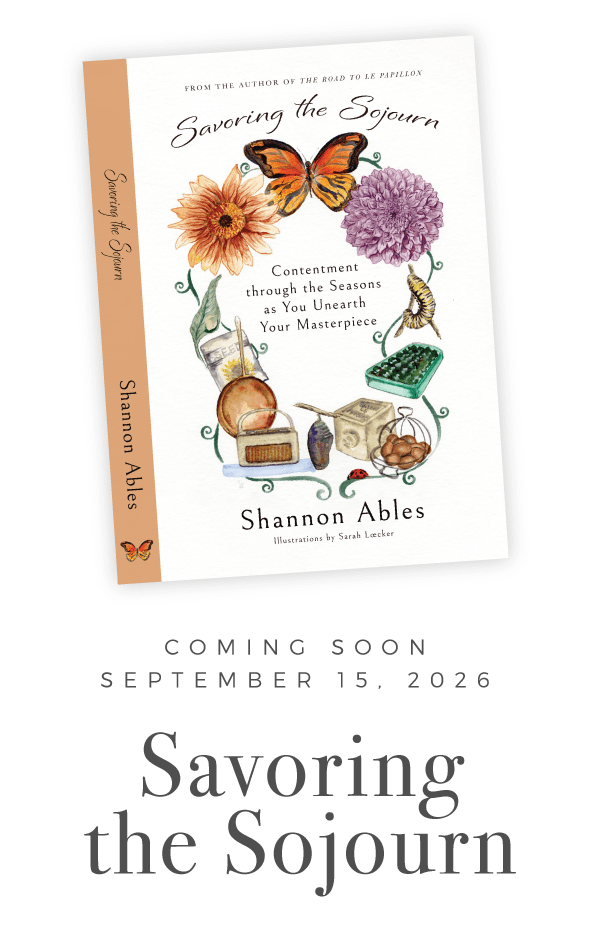
Forever Paris: A Guide to the Timeless Soul of the City (everything to see and do by day and night) by Marin Montagut
~View many photos of the interior of the book and learn about the author’s inspiration for creating this treasure of the invisible Paris here.

To advertise on this podcast please email: ad-sales@libsyn.com
Or go to: https://advertising.libsyn.com/thesimplesophisticate



Such a good post on neighboring, Shannon. As I had mentioned in another post, it is my intention this year to engage more with my neighbors and those that I regularly pass on my daily walks. Always keeping in mind good boundaries.
Karen, My apologies for my late reply. Thank you for your comment. Recalling your past comment, you are already off to a wonderful building of community in your neighborhood. I am so excited for you. 🙂 As Nicola shared below, just the simple acknowledgement or hello when passing each other on walks is more powerful to our peace than we understand it to be until we experience it. Enjoy this new year of connecting as you feel comfortable. 🙂
Shannon, I love your post today. I have a wonderful retired nurse who lives in the apartment over the garage. She is so appreciated for her very quiet lifestyle, along with an offer to walk my small dog when I need to be off island at a doctor’s appointment. I make sure to follow up with anything she needs. She is quite prompt with letting me know what she has observed…i.e. the delivery man has left my parcels at her doorstep. Another new neighbor has returned my hellos and waves, and we plan to go on walks in our quiet neighborhood soon.
Another neighbor and her husband will be selling and moving to be near their son…I will miss them tremendously, as he built my home in 1999, and has been an amazing resource for a single widow!! His wife has become a wonderful friend for life! We do not talk everyday, but she has my key for emergencies…
I could go on and on, but I salute you for emphasizing the importance of good neighborliness for everyone’s health and citizenship.
Joan, thank you for sharing all of this! What wonderful community you have and are part of creating! 🙂 As you have expressed, each neighbor connection is unique to the people connecting and honoring that is the key to building the relationships where we feel seen, respected and cared for and knowing we’re caring for them as they feel comfortable letting us. Such beautiful and inspiring examples you have shared. Thank you. 🙂
Dear Shannon
This was a great podcast and perfect reminder of the benefits and pleasure of being neighborly. I enjoyed your story about the neighbors garage door that didn’t close when they left for the weekend. Your action was thoughtful and respectful. I like that you engaged another neighbor to help. Smart thinking! We usually let neighbors know when we are leaving on vacation so they can watch for anything unusual that may occur. I am intrigued by the Petite Plaiser book, Forever Paris and want to check it out! I love the illustrations you posted on the blog.
Thank-you!
Jamie, Thank you for your comment and tickled you enjoyed! 🙂 Such a great idea to communicate with neighbors before we leave. Thank you for sharing that reminder. And I think you will find Forever Paris a wonderful resource. It is really jam-packed. Many trips to Paris are a must to see it all. 🙂
Dear Shannon, this was such a thoughtful piece and I was nodding along. I extend this approach in my local area. Since I have become a dog mum, I have met so many people whilst out on a walk. Even if it’s just a quick good morning or a few words I find it a good way to just brighten my day. Thank you. x
Nicola, Our pups really can be the connector to building neighborhood bonds, can’t they? I couldn’t agree more with you. I too have met so many people I wouldn’t have likely stopped to talk to had I no pup with me. The simplicity and brevity of the connection doesn’t mean insignificant; as you have shared, that alone is a wonderful boost to the day. Thank you so much for sharing your experience. 🙂
Hello! We have been fortunate to have good neighbors everywhere we’ve lived, with only one instance of an unfriendly next door neighbor. One of the reasons we chose to downsize from our primary home and relocate part time to our small, formerly weekend home in South Carolina was that our neighbors here at the once-weekend home are marvelous. We now count several of them as real friends, and those relationships are deepening. One couple visited us this past summer in Maine (where we also have lovely neighbors), and it was a real treat to show them around. We’ve been meeting other neighbors here when we walk Fitzwilliam (Fitz) our corgi. He’s the friendliest little soul and serves as a conversation starter. What was once a “good morning” evolved into name swapping. While that’s as far as it will go for some of them, friendly relations bolsters my overall wellbeing.
I so enjoyed this episode and it gave me some good takeaways. My neighborhood was one of the pulls to where I purchased my house. While it is full of young families, being single, I have still found community and feel included. I am in a women’s book club and the neighborhood always helps each other – which comes in handy, for example: this weekend, Dallas is in the middle of a winter storm and it’s still dumping freezing rain and sleet! The neighborhood text thread is already checking on each other.
Emily, that is wonderful to hear! Thank you for sharing an example of how neighbors help each other while respecting each other’s space as needed. I am tickled for you and the warm welcome you have received. 🙂